Olympic Medals & Diplomas

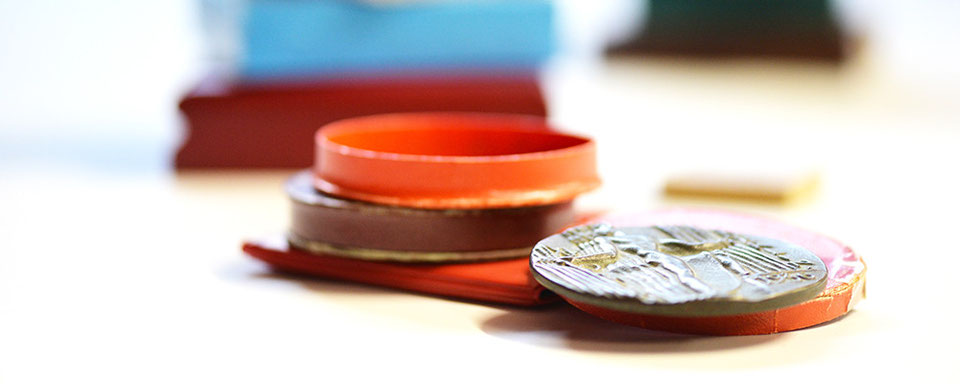
With regard to medals and diplomas, one must first determine whether they have been awarded to Olympic participants or Olympic champions.

Participants in the Olympic Games have always received a participation medal and often a certificate of participation. As a rule, the winner of a discipline received a winners’ gold medal, silver for second place and bronze for third. In addition, the first three each received a diploma. Often, such a diploma was also presented to all discipline finalists.

A collection of participation medals is a beautiful piece of Olympic history, since, if one has a complete collection, one has a souvenir of all the Olympic Games since 1896.


However, it is much more difficult to collect winners’ medals or winners’ diplomas. Due to their scarcity and the fact that an Olympic champion or his/her relatives are very reluctant to part with a winners’ medal, collecting is a major challenge, both in time and in financial terms.


Olympic Torches


On 20th July 1936, by focusing the sun’s heat with a mirror, for the first time since the beginning of the modern Olympic Games the Olympic flame was ceremonially lit at Olympia in Greece. The subsequent torch relay, which was introduced on the initiative of the German sports historian Dr. Carl Diem (1882-1962), lasted 12 days and covered 3050 km through 7 countries. Each of the 3,331 runners was allowed to keep his torch as a souvenir.

Thus, the idea of the torch relay was born and, after the Second World War, was first held at the 1948 St. Moritz Winter Olympics.

Thereafter, to this day, the torch relay has become an integral part of the Olympic ceremony.


The beautiful design of the various torches soon attracted the attention of collectors around the world. As with all Olympic memorabilia, building a sizeable collection is a major challenge.


Information icon

Wir benötigen Ihre Zustimmung zum Laden der Übersetzungen

Wir nutzen einen Drittanbieter-Service, um den Inhalt der Website zu übersetzen, der möglicherweise Daten über Ihre Aktivitäten sammelt. Bitte überprüfen Sie die Details in der Datenschutzerklärung und akzeptieren Sie den Dienst, um die Übersetzungen zu sehen.